


Virpi and Petri Paavola invest in productivity and wellbeing
They have developed their farm with steady determination. The farm has invested in an automated bedding system and a biogas plant. These innovations have significantly improved farm productivity as well as the wellbeing of both people and animals.
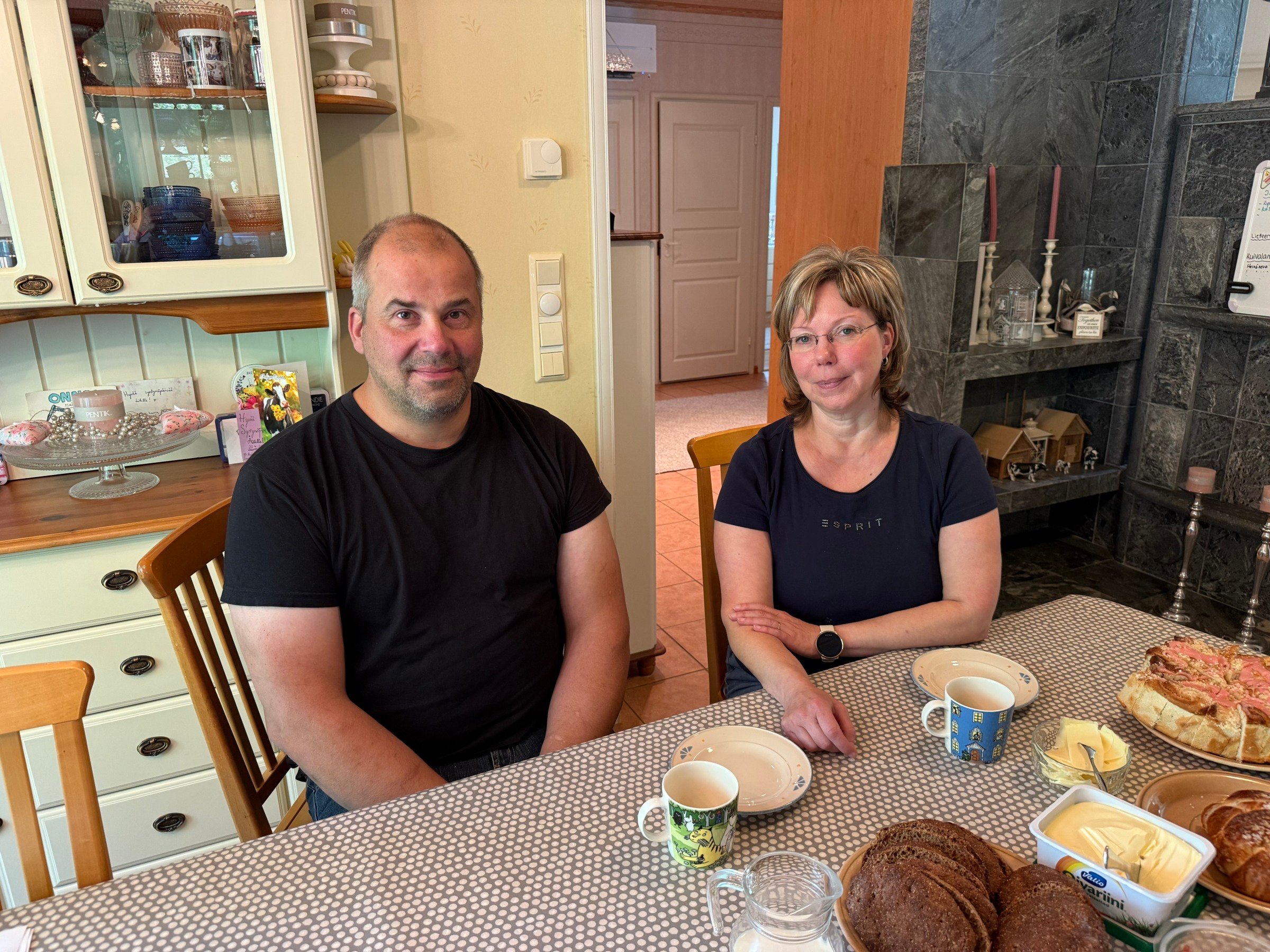
Photo: Petri and Virpi shared that they began farming in 2009 with a tie-stall barn housing 34 cows. Today, in their freestall barn, five milking robots operate, and the herd has grown to approximately 240 cows.
Domestic food and family strength
We sit down at Virpi and Petri’s coffee table at the end of August, when Petri explains that the harvesting season is at its busiest. However, frequent rains have disrupted the work, and Petri says that as soon as they get into the field, they almost have to turn back because of the weather. The third-cut silage harvest is also pressing, meaning that, like many Finnish farms, this one has little time to “rest on its laurels” while producing homegrown food from field to table. Petri notes that both the first and second silage cuts were successful this summer.
At the Paavola farm, five milking robots are in operation, and in addition to Virpi and Petri, their grown-up children are actively involved in the daily farm work. The Paavola family follows a traditional division of farm responsibilities: Petri is the machinery expert, while Virpi focuses on herd development and breeding. In earlier years, Virpi also did more tractor work, but now that their sons have grown and taken over the fieldwork, she can dedicate more time to other farm operations.
Petri recalls that small-scale contracting work began as early as 1997, and in 2007 he founded Kone Paavola Ltd, whose main source of income until 2014 came from UPM’s Key Entrepreneurship program. Virpi remembers that Kone Paavola employed 14 people at the time. Out in the yard, the Valtras await Petri and the boys, ready for the next round of contracting and fieldwork.
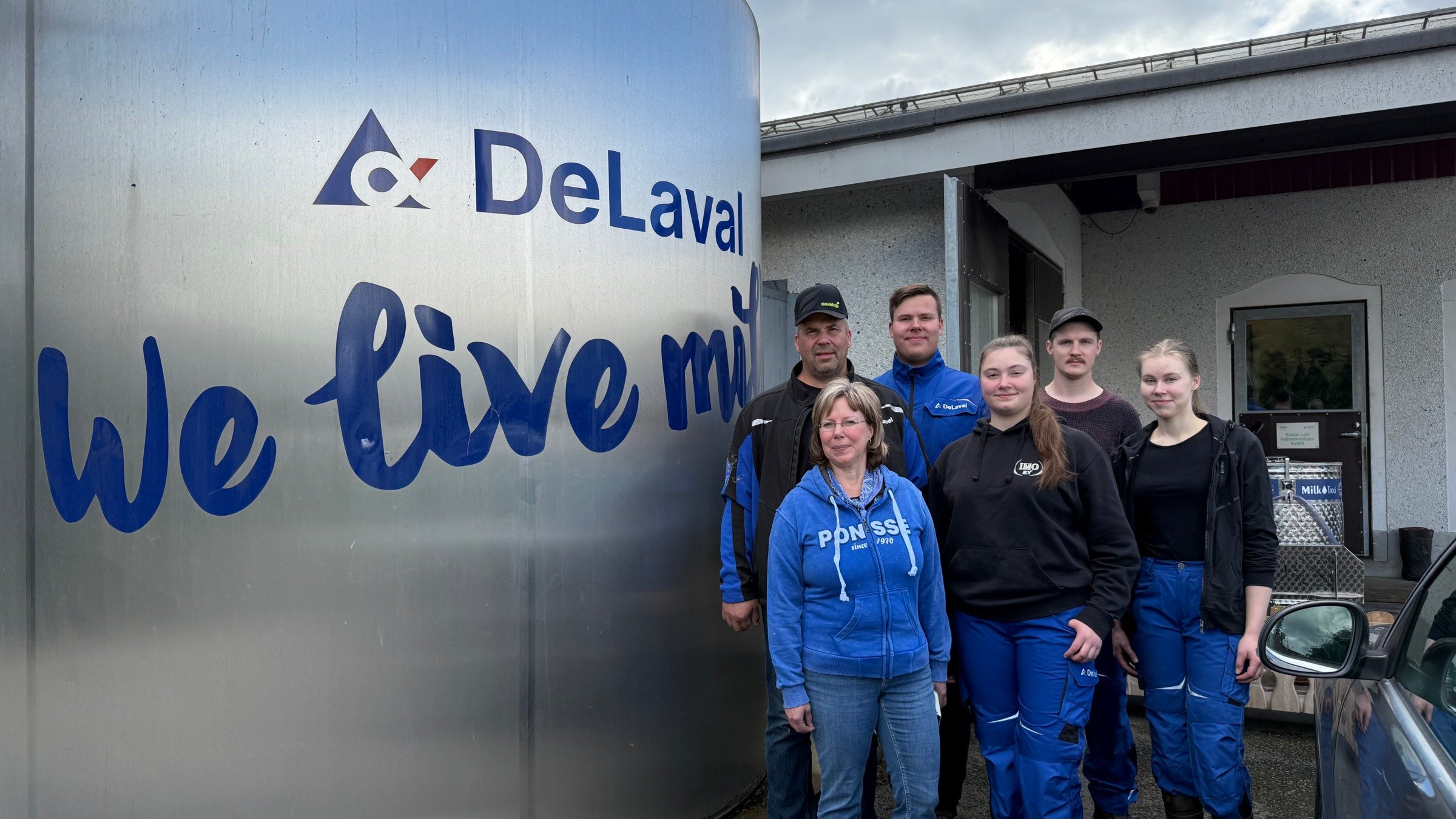
Photo: Petri and Virpi’s children—Pauli, Veera, and Laura—along with Laura’s spouse Lauri, managed to join the photo despite their busy schedules. The youngest, Leevi, is currently serving in the army.
Farm operations have evolved and expanded
Paavola Farm is Petri’s family farm. In 2005, Petri established a farming partnership with his parents, and a few years later, in 2009, Virpi and Petri took over the farm operations, then housed in a tie-stall barn with 34 cows. In 2011, the couple began milking in a new freestall barn equipped with a single milking robot. Petri and Virpi recall that the herd’s average production at that time was around 6,700 kilograms. When they launched their own farm operations in 2009, that figure steadily rose to about 10,000 kilograms, and today, average milk yield exceeds 12,000 kilograms ECM (energy-corrected milk). This reflects the couple’s sustained efforts in improving housing conditions, feeding, and breeding.
Both Petri and Virpi are from Kaustinen, where their farm is also located. Before the generational transfer, during the couple’s early years together, Petri worked at the Viikki research farm in Helsinki. From there, they acquired ten cows to form the base of their breeding line. In the early years, the herd was expanded by purchasing animals from other farms, but over time their own breeding work has significantly advanced the herd’s genetics.
The cultivated area has grown over the years—from 40 hectares of owned and leased land to today’s 420 hectares—illustrating the strong development and steady growth of the farm over the decades.
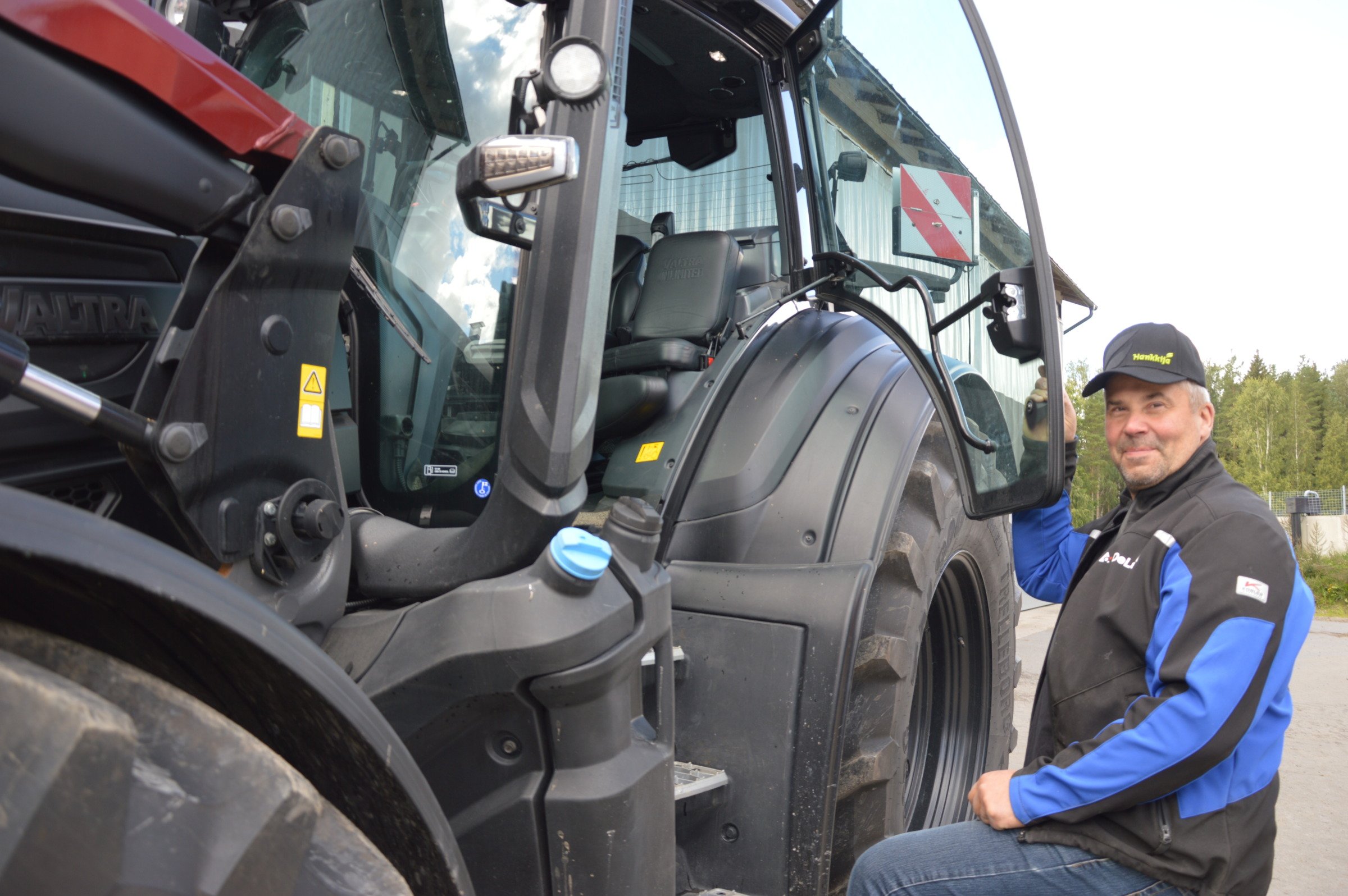
Photo: At our request, Petri proudly shows one of the Valtras parked in front of the machinery hall.
Toward biogas production
After finishing our coffee, we head over to the biogas plant. We try to stay on schedule, but as we go through the farm’s history and milestones, time flies by. Virpi and Petri explain that plans for a biogas plant had been in the works for several years. Now, the plant—with a reactor capacity of 1,100 cubic meters—produces both electricity and heat for the farm’s needs.
Petri shares that the youngest son has been in charge of monitoring the plant, but since he is currently in military service, Petri has taken over that responsibility. This summer was the first time they were able to utilize the digestate (rejection residue) on their fields, and they have been very satisfied with the results. Petri notes, however, that every year is different, so time will tell how the digestate performs in the coming seasons as they gain more experience.
He observed during spring that the use of digestate could have allowed them to reduce chemical fertilizer application, and its effects were clearly visible in the growth of both grass and grain crops—the cereals established particularly well. Thanks to the biogas process, the resulting digestate is easier to spread and more readily available for plant uptake. Because it is more soluble, it doesn’t remain on the leaf surface and is absorbed more efficiently by crops. According to Petri, the initial experience with digestate has been very positive, with the added benefit of noticeably reduced odor emissions.
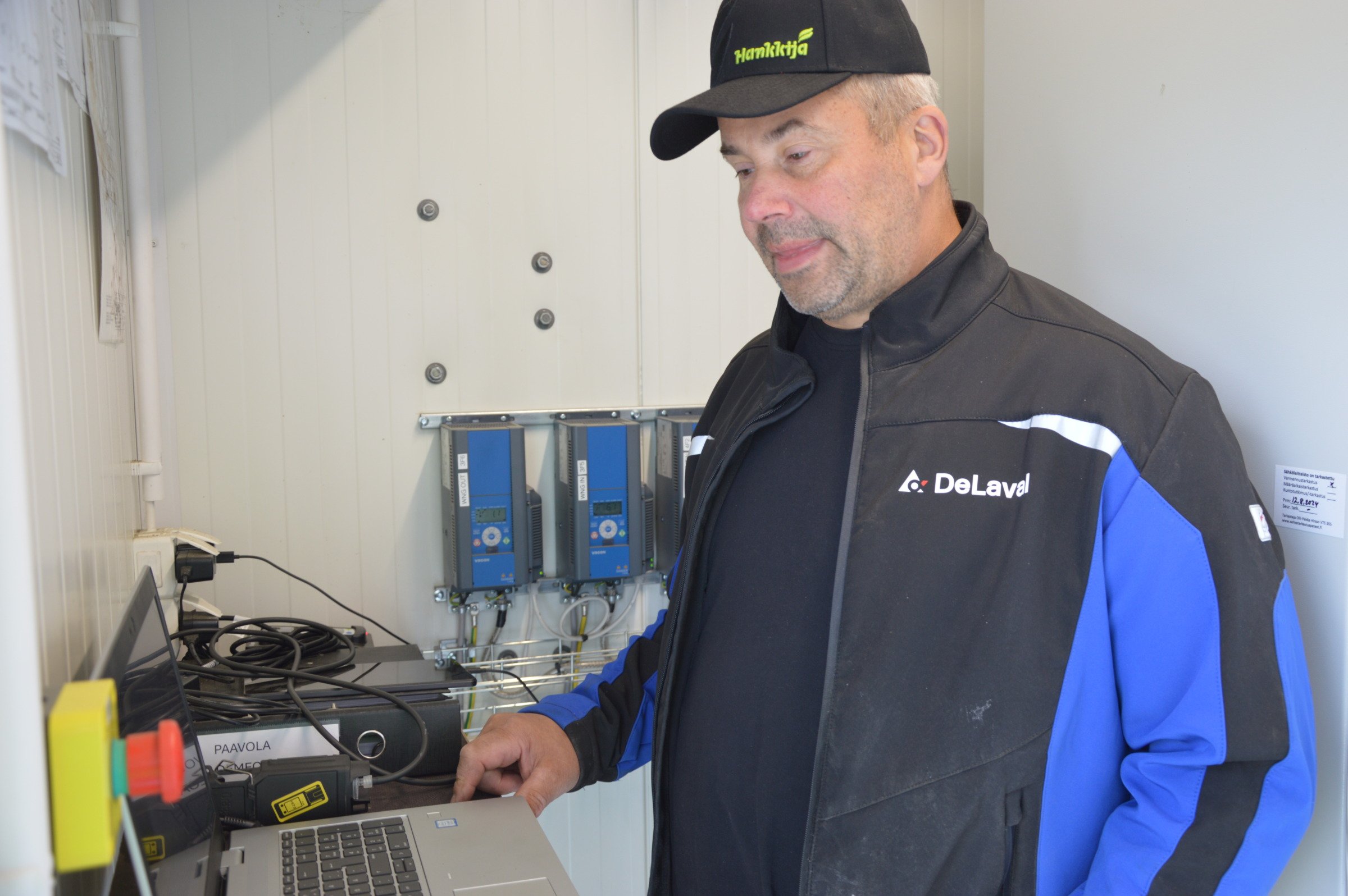
Photo: Petri monitors the biogas plant’s operations on the computer.
Investing in health and wellbeing has paid off
After completing the tour and review of the biogas plant, we head toward the cowshed. Virpi explains that their daughter Laura is assisting the veterinarian with dehorning calves, and by the time we arrive, the work is finished and the vet is off to the next farm.
We go to see the Renki automatic bedding system, which Petri demonstrates in manual mode. The Renki unit can be programmed to automatically distribute bedding across the stalls, and it can also be operated via a controller or smartphone. During the demonstration, some sawdust lands briefly on an animal’s back, but the system includes a sensor that prevents bedding distribution when a cow is present beneath the spreader.
Virpi says that the Renki system has greatly improved welfare and adds that she wouldn’t want to give it up, as they are very satisfied with its performance. Petri recalls that Esko visited the farm to sell the Renki unit in 2020. The farm uses sawdust for bedding, and the external filling silo is loaded with a front loader. Virpi notes that her back truly appreciates that Renki now handles bedding autonomously. Petri remembers that spreading sawdust bales used to be a sweaty and dusty task — thankfully, that’s now just a memory.
The farm also features Demeca’s panel windows. The dairy barn has automatic panel windows, while the heifer barn operates them manually. Good ventilation is essential for animal welfare, and in the couple’s view, the panel windows have been one of their most significant investments for maintaining excellent air quality
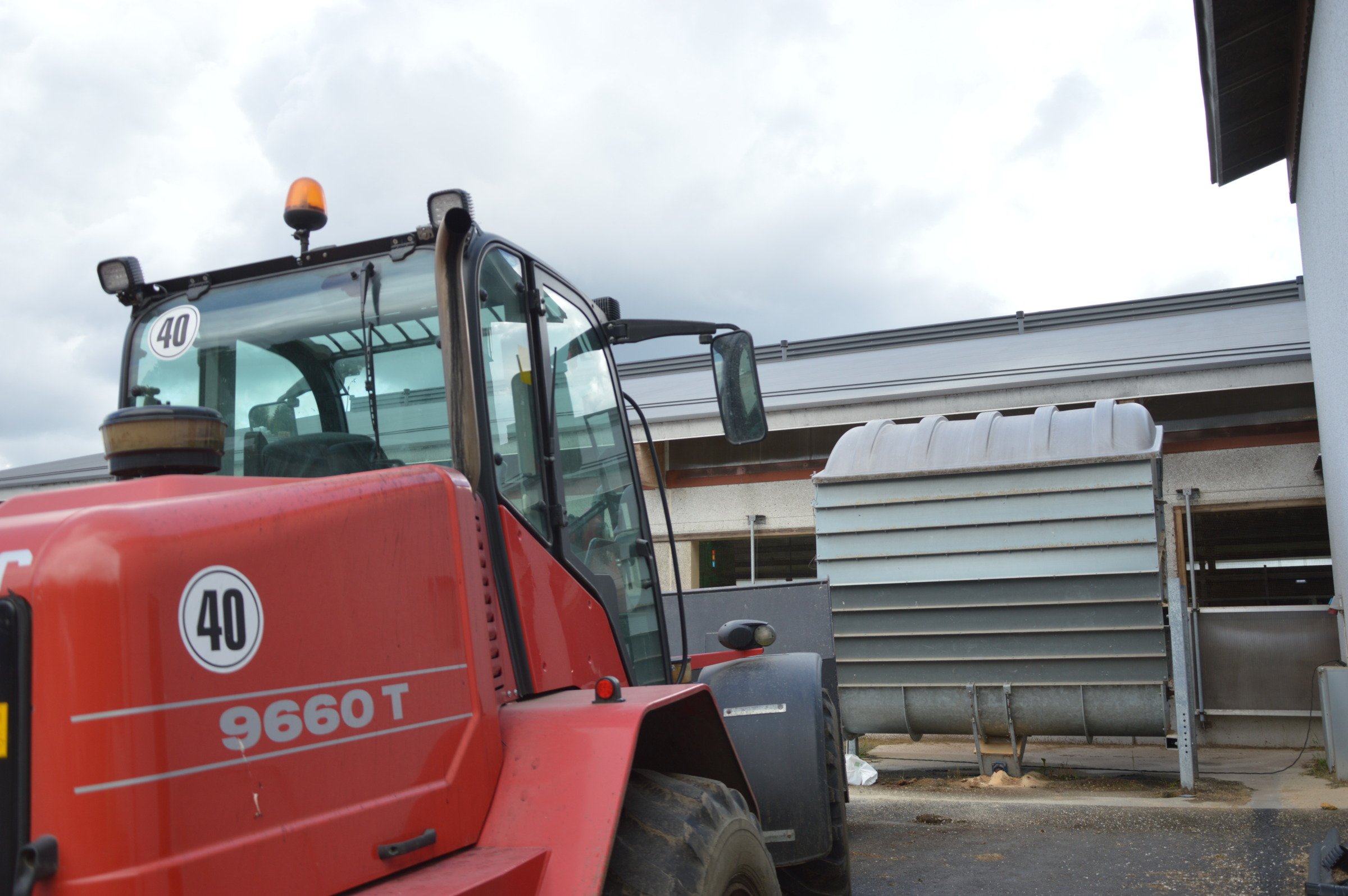
Photo: The filling silo is loaded with sawdust using a front loader for the bedding system.
Domestic food grows through solid expertise
After observing the Renki system, we head over to admire the cows. On the way, we see calves happily running around in the pasture. Virpi explains that she focuses on comprehensive herd breeding, which is based on the animal’s overall traits: genetic potential, production, conformation, health, and temperament.
She allows these characteristics to guide her breeding decisions and describes herself as an animal lover, which also influences her approach to breeding work. There are even a few special individuals in the herd, including a couple of Lapland cows.
Virpi’s patient and dedicated breeding efforts have clearly paid off. VikingGenetics has already acquired a total of six bull calves and two heifers from the farm, and several embryo flushing contracts have also been carried out successfully.
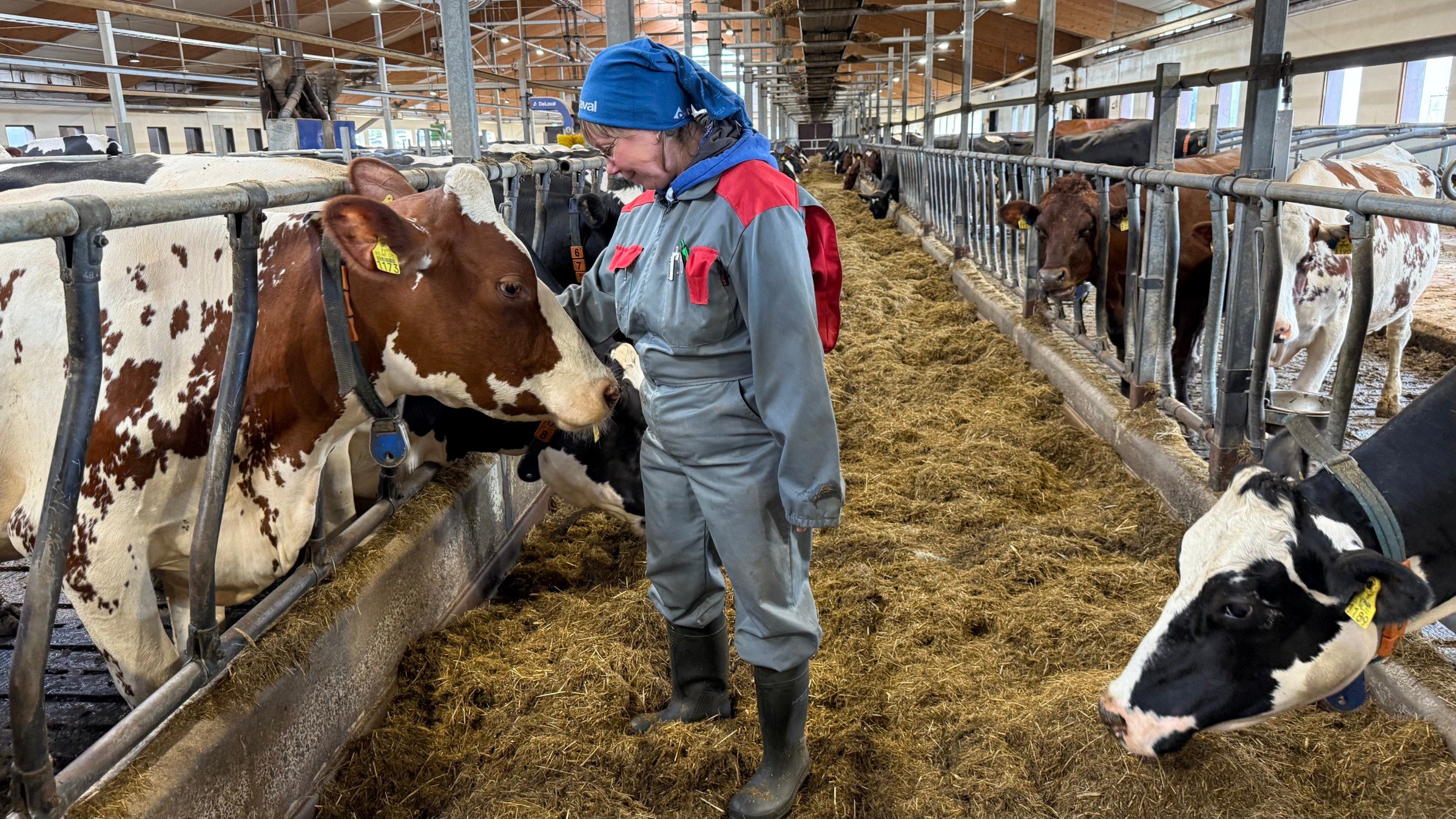
Photo: Virpi introduces the farm’s cattle and always finds a moment for a few affectionate pats while chatting.
After the farm tour, it is clear that Paavola Farm continues to develop and look toward the future. Virpi explains that the farm is moving its operations in a more environmentally friendly direction, with the biogas plant serving as an important starting point for that progress.
After our pleasant conversation and tour, we discuss the idea of holding an open day for the biogas plant—a traditional event to celebrate its completion. We agree to revisit the plan once the farm family has more time, that is, after the fieldwork has been completed.
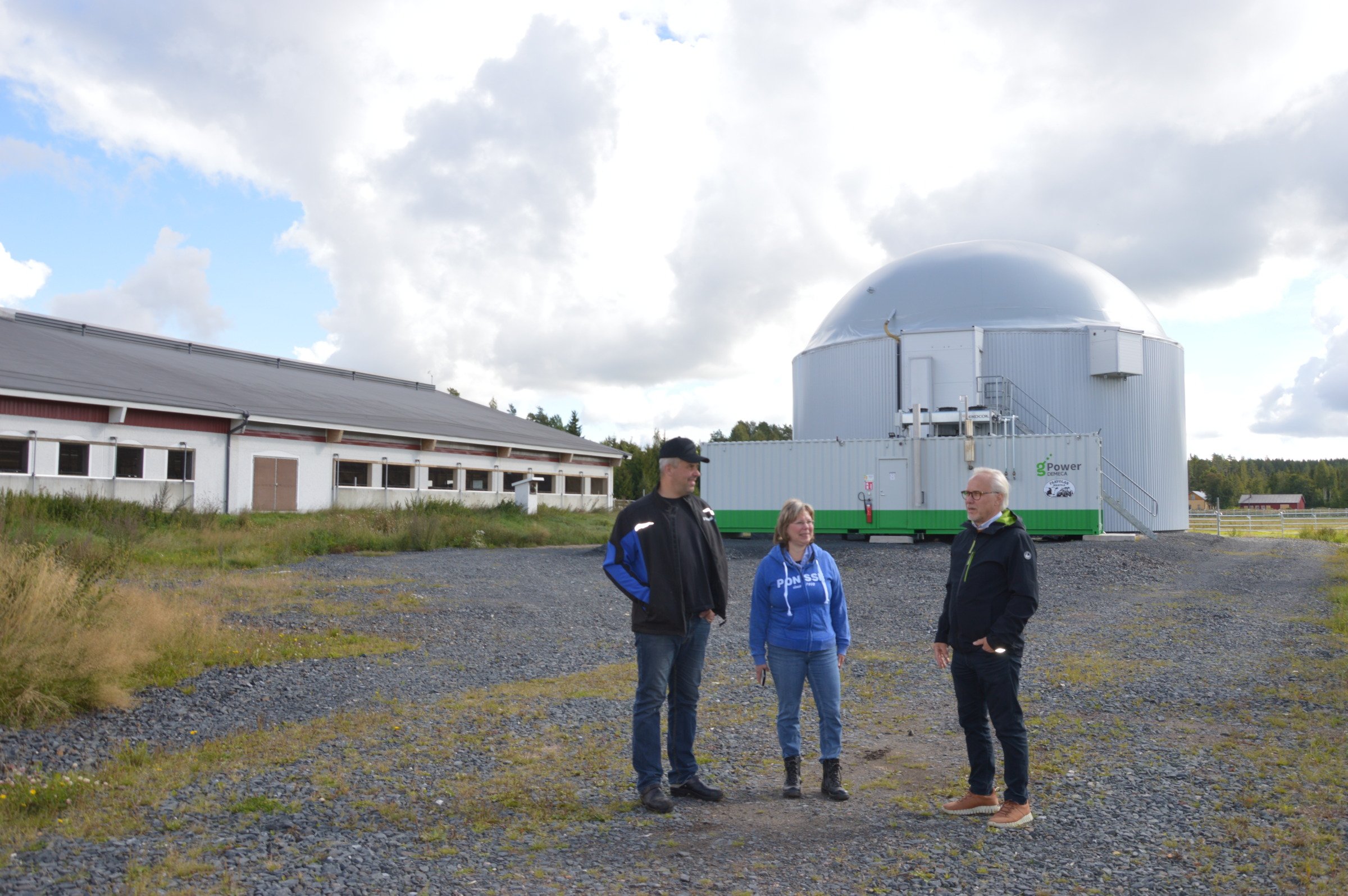
Photo: Farm owners Petri and Virpi together with Hankkija’s Machinery Sales Manager, Vesa Muhonen, in front of the biogas plant.
*This customer story was created in collaboration with Hankkija, Finland.